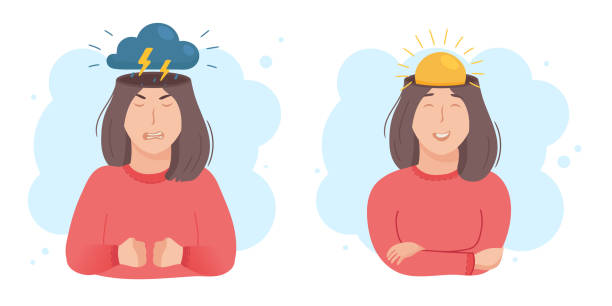
Your Brain Has Reset Buttons (And They Just Need You to Push Them)
Long before your thoughts name it, your body is already holding the stress — in your breath, your posture, the quiet tension in your hands.
Or maybe you snap at someone after a long day at work. Your back pain gets worse as you have an argument with your partner. You can’t seem to get motivated, even though you have a million things on your to-do list.
The good news? Your brain isn’t actually working against you. It’s trying to protect you.
Every day, your nervous system constantly gathers information from both your body and the world around you. Based on that information, it generates a response. Sometimes that response is calm and focused. Other times, it’s pain, anxiety, or fatigue. It’s a signal that something isn’t quite right, and that it needs to be addressed.
More good news – we can take the cue and respond in kind.
It starts with self-regulation – using simple strategies to help guide your nervous system back toward a state where you can think clearly, move better, and take the right next step. Here are a few neuroscience-backed ways to help your brain reset.
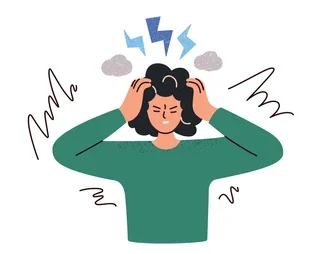
Feeling Stressed? Try the Physiological Sigh.
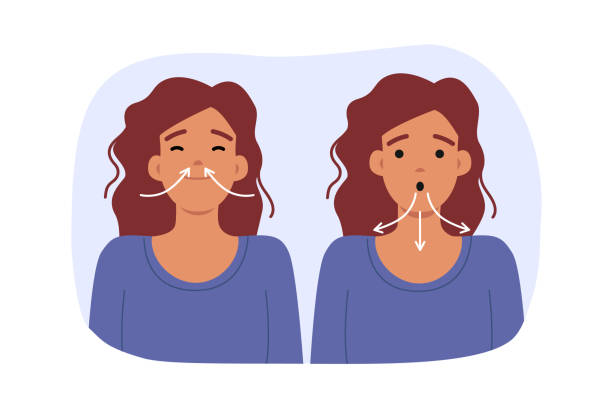
Sometimes the fastest way to calm your mind is through your lungs. The physiological sigh is one of the quickest ways to encourage your body’s “rest and recover” response.
Here’s how:
Take one deep breath in.
Before exhaling, take one small extra puff of air to completely fill your lungs to 100%.
Then slowly exhale.
Repeat 3 times. Or continuous for 5 minutes for an even deeper reset.
That’s it. This simple breathing technique helps activate your parasympathetic nervous system, lowers your heart rate with the full exhale, and helps your body shift away from a stress response.
Sometimes you’re just a breath away from breaking the cycle.
Feeling Anxious? Go for a Walk.
When we’re anxious, our brain’s alarm system, which is responsible for highly emotional and fearful responses, the amygdala, becomes more active.
One of the simplest ways to help settle it? Walk.
Whether it’s on a treadmill, around the office, or down the street to get a coffee, walking gives your brain new sensory information and encourages your body to regulate naturally.
Amplify that effect if you do it outside in nature – breathing in the fresher air, feeling the calm of greenery, and soaking in sunshine.
Feeling Sad? Acknowledge It…Then Move your Body.
It’s tempting to ignore difficult emotions. But there is so much power in acknowledging our feelings. It allows us to observe and understand what they may be signalling to us, and gain clarity for the next steps.
Take a moment to notice how you’re feeling without judgment. Then get moving. Go for a walk. Stretch. Go for a bike ride. Move and feel your way into clarity, rather than ruminate or overthink with your head.
Fun fact: Exercise encourages the release of endorphins – your body’s own natural “feel-good” chemicals. In fact, the word endorphin literally means endogenous morphine, quite literally our own natural painkiller, highlighting their role in naturally helping regulate discomfort and improve mood.
Movement won’t erase difficult emotions, but it can help your brain process them more effectively.
Feeling Angry or Frustrated? Look Up.
Ever heard the phrase “seeing red?” When we’re angry, our attention narrows, and we become hyper-focused on the problem.
Try this instead:
Look out a window. Lift your eyes toward the horizon. Take in your entire surroundings instead of focusing on one thing.
Widening our visual field can help reduce that “tunnel vision” feeling by blunting the noradrenaline release and encouraging our nervous system to shift into a calmer state.
Sometimes seeing the big picture means literally doing that.
Feeling Unmotivated? Wake Up Your System.
Motivation doesn’t always appear of its own will. Sometimes your nervous system needs a gentle nudge.
One strategy is Tummo breathing, a breathing exercise that emphasizes longer inhales and shorter exhales.
Combined with other practices like Breath of Fire or even brief cold exposure (done safely), these techniques can activate stress hormones that put you in a motivation drive.
How to Practice Tummo Breathing
- Find a comfortable seated position and try to relax as much as possible.
- Take a long, full inhale through the nose that expands your chest and torso.
- Exhale quickly through the mouth while pursing the lips, like blowing up a balloon.
- Continue this rhythm of long inhales and shorter exhales for 10-15 breaths. Release that last breath all the way through your body.
- Return to your normal breathing and relax your body, notice how you feel.
If you’re new to Tummo breathing, start slowly. If you become dizzy or uncomfortable, stop and return to normal breathing. This technique isn’t about forcing your breath – it’s about creating a steady, controlled rhythm that leaves you feeling more alert and energized throughout the day.
Sometimes motivation follows movement – not the other way around.
Feeling Insecure? Put Pen to Paper.
Our thoughts can feel overwhelming when they stay trapped inside our heads. Writing slows everything down.
Take five minutes and write down:
- Three things you’re good at.
- Three things you’re proud of.
- Three challenges you’ve overcome.
By writing down our feelings, our prefrontal cortex is engaged and brings logic to our internal emotions. When we’re ruminating and thinking, words run around in our heads incoherently, which can exacerbate the way we’re feeling.
Sometimes seeing your strengths on paper makes them much easier to believe.
Small Habits. Big Changes.
Self-regulation isn’t about eliminating stress. It’s about giving your brain better tools to respond when stress inevitably shows up.
One deep exhale. One walk. One movement. One page in a journal. One look toward the horizon. One big inhale.
These small actions can have a powerful impact on how your brain and nervous system respond to everyday life. And repeated consistently, navigating life will start to get easier and easier.
Your brain is a work in progress. Let’s program it for resilience, strength, and power.